Category: Banking Furniture

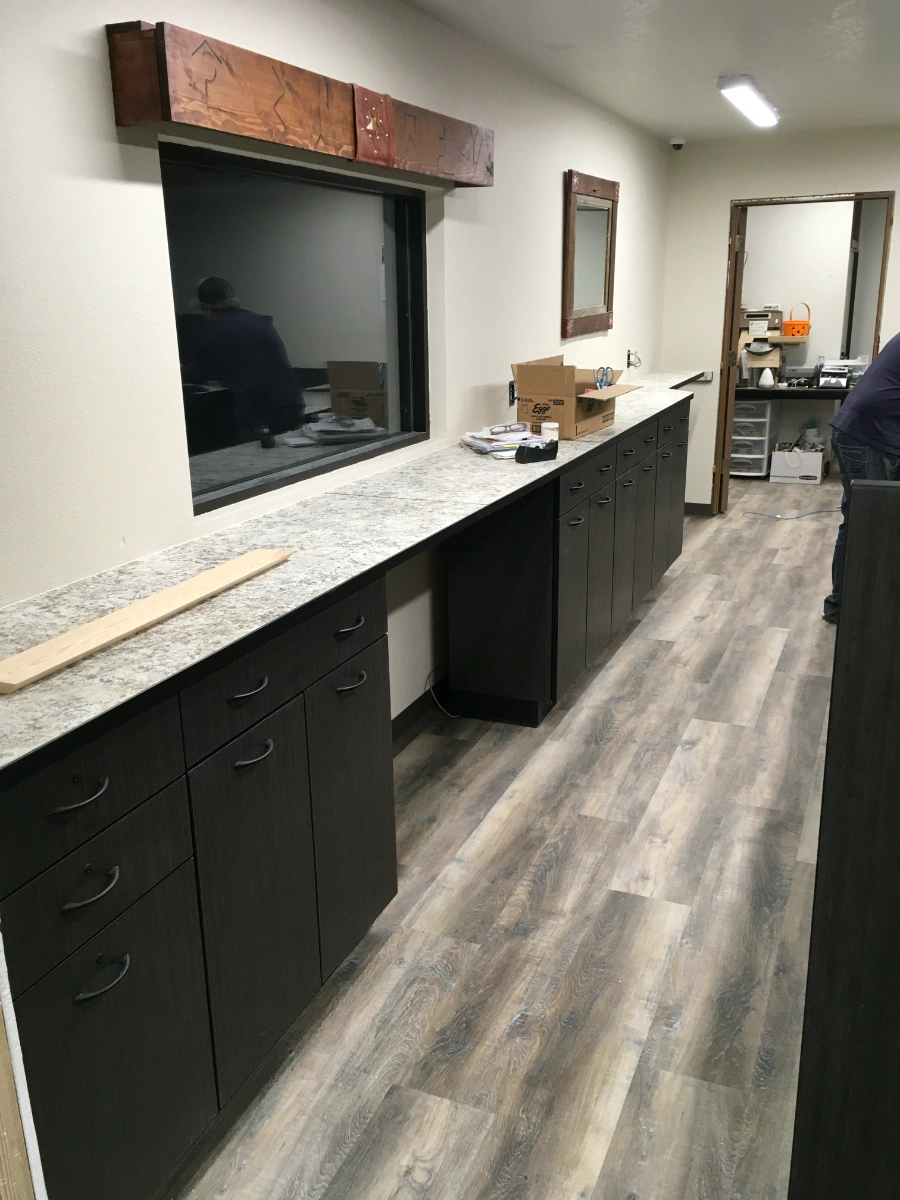
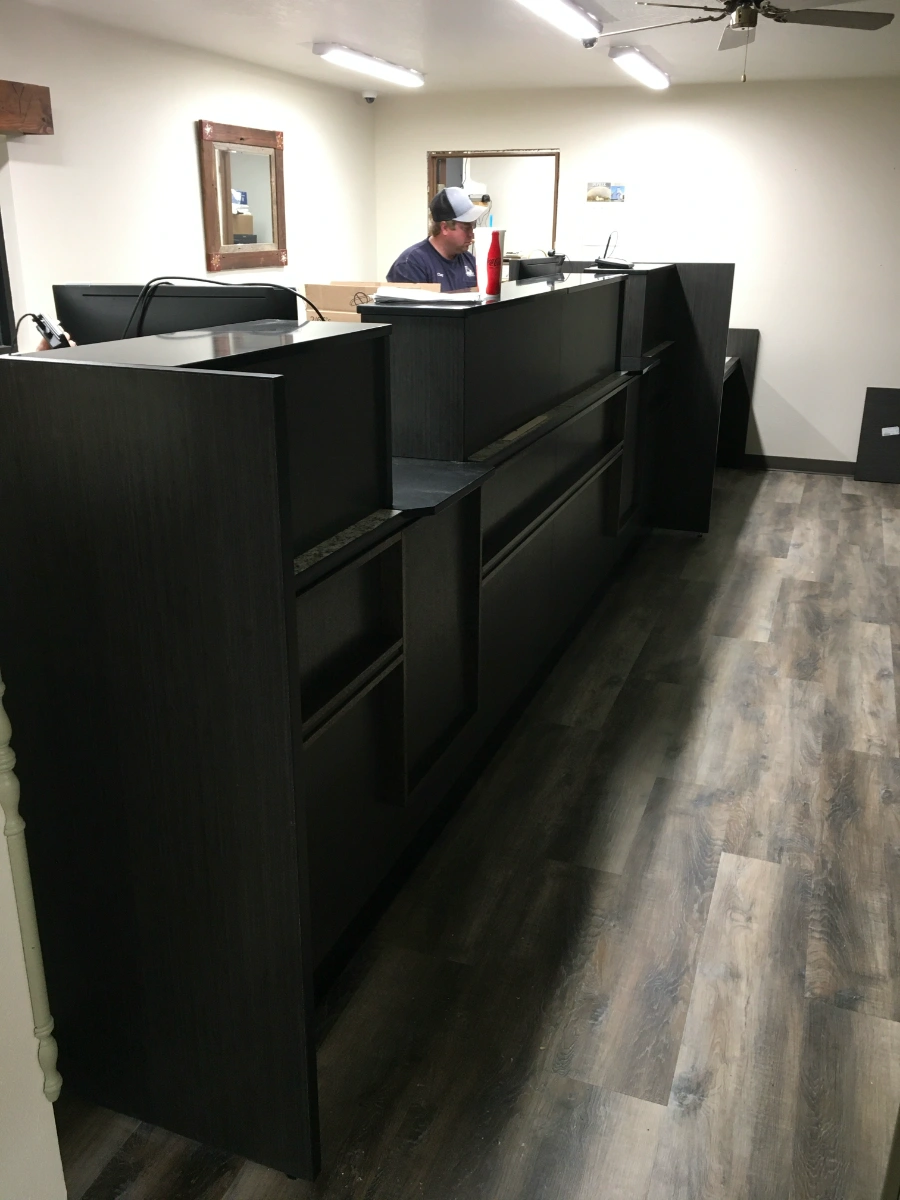
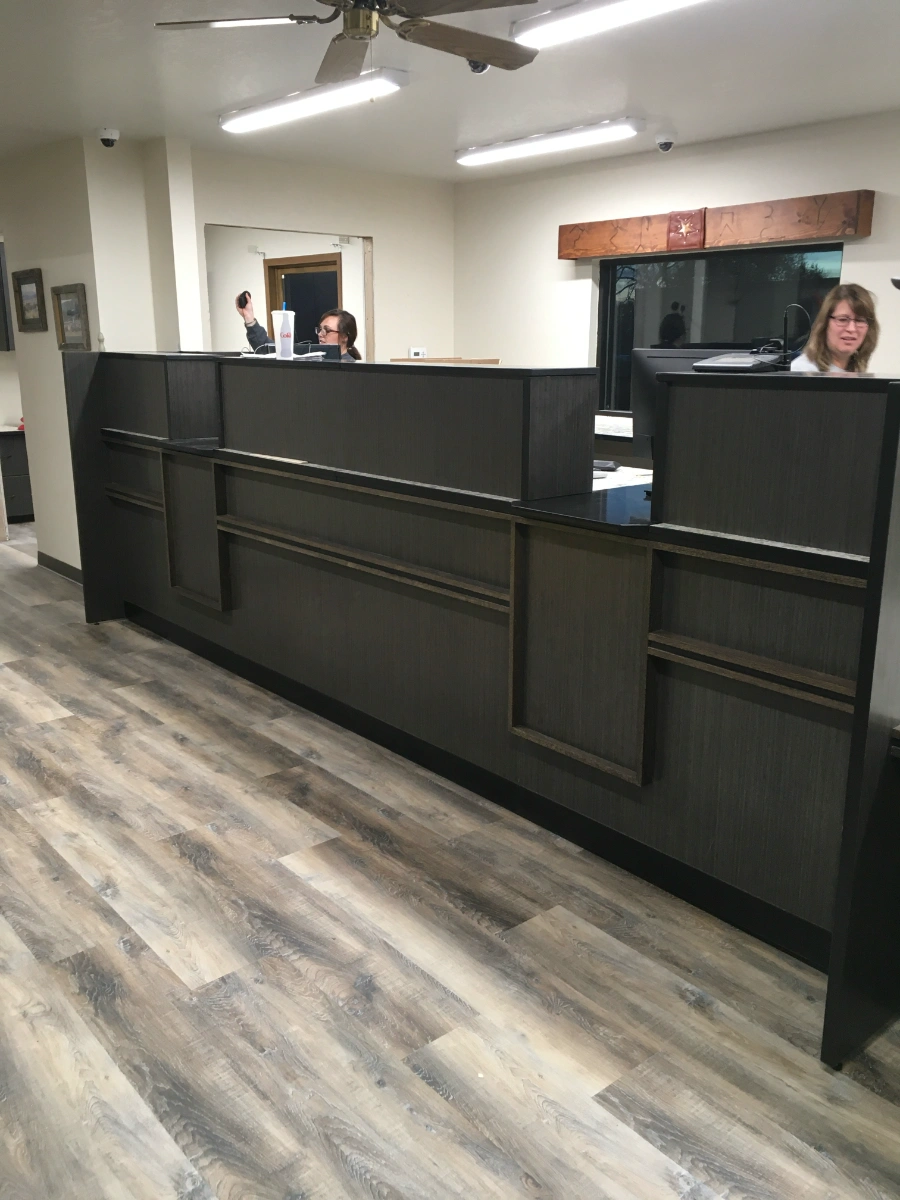
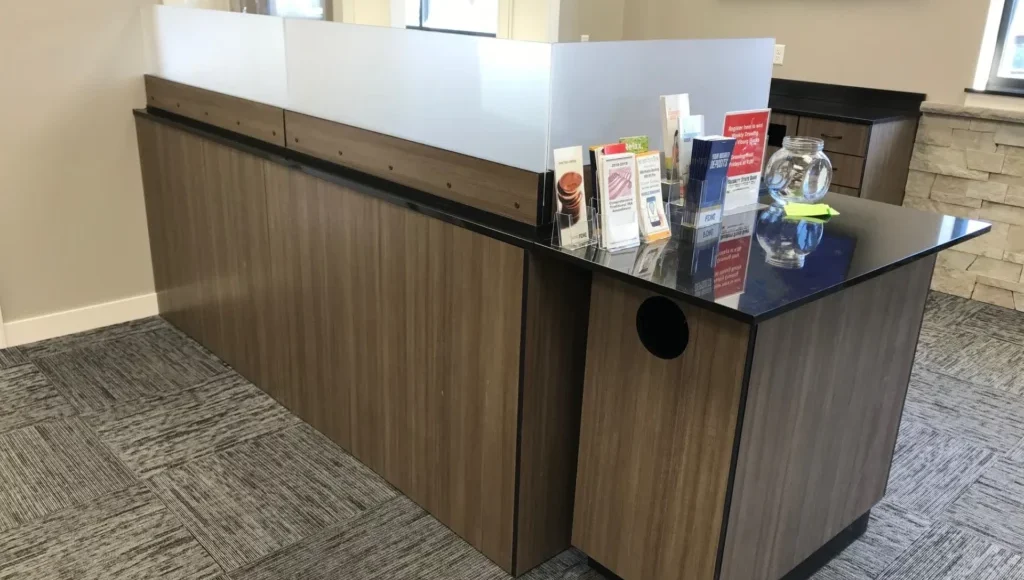
A photo of a newly installed modular bank teller line

How Bank Furniture Affects Customer Trust

When a customer walks into a bank branch, they form an impression before anyone greets them. The lobby, the teller line, the materials, the condition of the furniture, and the overall environment all communicate something about the institution. Whether the message is one of stability and professionalism or neglect and indifference often comes down to the physical workspace.

Banking is a trust-based business. Customers are handing over their money, their financial information, and in many cases their long-term financial plans. The environment where those interactions happen plays a larger role in shaping confidence than most banks realize.
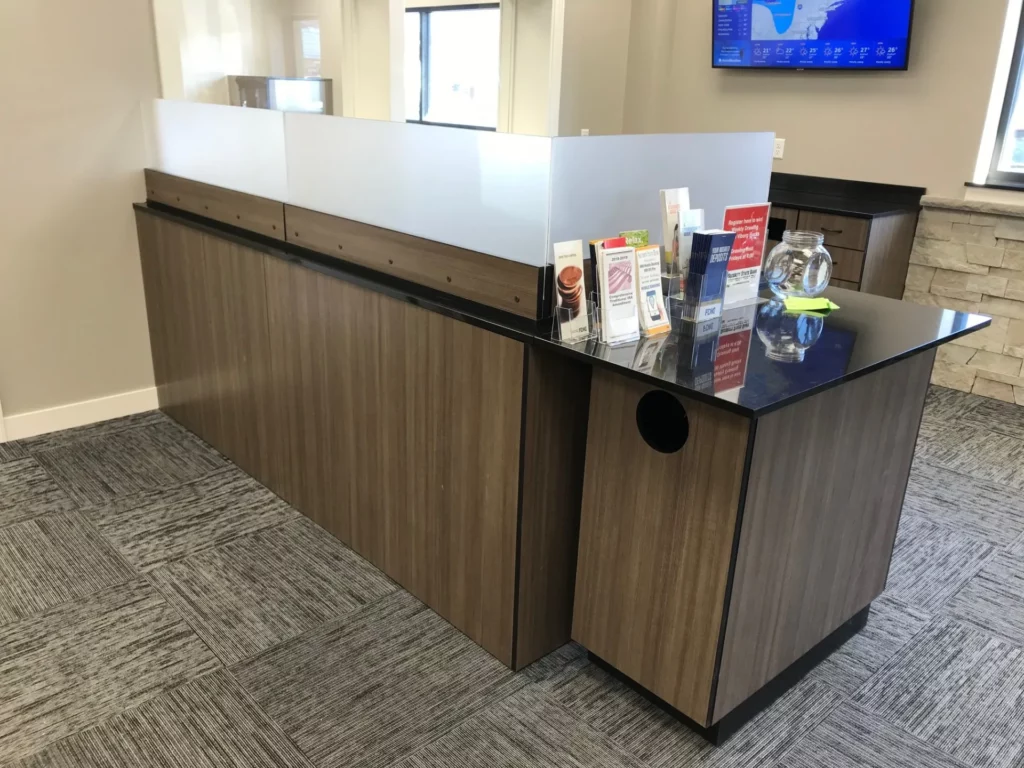
A photo of a newly installed modular bank teller line

First impressions happen at the teller line

The teller station is usually the first physical touchpoint a customer has with the bank. It is where they hand over deposits, discuss transactions, and interact with staff face to face. The design, condition, and appearance of that station set the tone for the entire relationship.

A teller line with worn surfaces, mismatched finishes, or outdated materials sends an unintended message. Customers may not consciously think about the furniture, but they register the overall impression. A dated, tired-looking branch suggests an institution that is not investing in itself. For a business built on trust and long-term relationships, that impression carries weight.

A well-designed teller station communicates the opposite. Clean lines, quality materials, coordinated finishes, and a layout that supports efficient service all contribute to a sense of professionalism. The customer may not notice the furniture specifically, but they notice that the branch feels modern, organized, and well-run.

Layout affects how customers experience service

Beyond appearance, the physical layout of a branch directly affects how customers move through the space and how they experience the service they receive.

A poorly laid out lobby creates confusion. Customers are unsure where to go, where to wait, or who to approach. Lines form in awkward places. Conversations that should be private happen within earshot of other customers. The experience feels disorganized even if the staff is doing everything right.

Thoughtful furniture placement solves these problems quietly. Customer service islands positioned near the entrance give visitors an immediate point of reference. Personal banker workstations placed with appropriate spacing provide a sense of privacy for financial conversations. A teller line designed around actual customer flow reduces congestion and wait times.

The goal is an environment where the furniture guides the experience without drawing attention to itself. When the layout works, customers move through the branch naturally and leave feeling well served.

Employee workspace affects service quality

The customer-facing side of the teller line is only half the equation. The employee side matters just as much, because the quality of the workspace directly affects the quality of the service delivered from it.

Teller stations with inadequate storage force employees to work around clutter. Workstations without proper cable management create visual disorder and make equipment difficult to service. Counters at the wrong height cause fatigue over long shifts. Shared workspaces without enough individual space lead to errors and frustration.

When employees have a workspace that supports how they actually work, including organized storage, accessible equipment, comfortable ergonomics, and enough personal space, they perform better. Transactions move faster. Errors decrease. Staff morale improves. All of that translates directly into a better customer experience.

Outdated furniture ages the entire branch

A bank can update its paint, flooring, signage, and digital displays, but if the teller line and workstations are visibly outdated, the branch still looks old. The furniture anchors the visual impression of the entire space.

This is especially true for banks that have renovated other elements of the branch over time but left the original teller stations and casework in place. The contrast between updated surroundings and aging furniture can actually make the furniture look worse than it would on its own.

For banks with multiple branches, furniture consistency also matters. When a customer visits one location and sees modern, coordinated furniture, then visits another location with a completely different look, it undermines the sense of a unified brand. A consistent furniture standard across branches reinforces the identity of the institution.

Renovation does not have to mean disruption

One of the most common reasons banks delay a furniture upgrade is concern about disruption. A branch cannot easily close for a week while contractors build a new teller line on site.

This is where the construction method matters. Custom modular furniture can be designed, fabricated, and installed without an extended branch closure. Components are built off site in a controlled shop environment, delivered ready for assembly, and installed over a weekend. The branch closes Friday afternoon and reopens Monday morning with a completely updated interior.

The modular approach also means the investment is not permanent in the way traditional built-in millwork is. Individual components can be replaced, reconfigured, or relocated as the bank’s needs change over time. That flexibility protects the initial investment and makes future updates more manageable.

The environment communicates before anyone says a word

A bank branch is not just a place where transactions happen. It is a physical representation of the institution’s values, stability, and commitment to its customers. The furniture, layout, and overall environment either reinforce that message or undermine it.

Banks that invest in well-designed, professionally built furniture are not just improving aesthetics. They are investing in customer confidence, employee performance, and the long-term perception of their brand.

Modular Furniture Group designs, fabricates, and installs custom teller stations, transaction counters, banker workstations, customer service islands, and related commercial casework for banks and credit unions.

Based in Omaha, Nebraska, the company serves clients throughout Nebraska, Iowa, Colorado, Kansas, Missouri, Minnesota, North Dakota, South Dakota, and beyond, with completed projects from coast to coast. Contact Modular Furniture Group at (402) 289-0309 or [email protected].
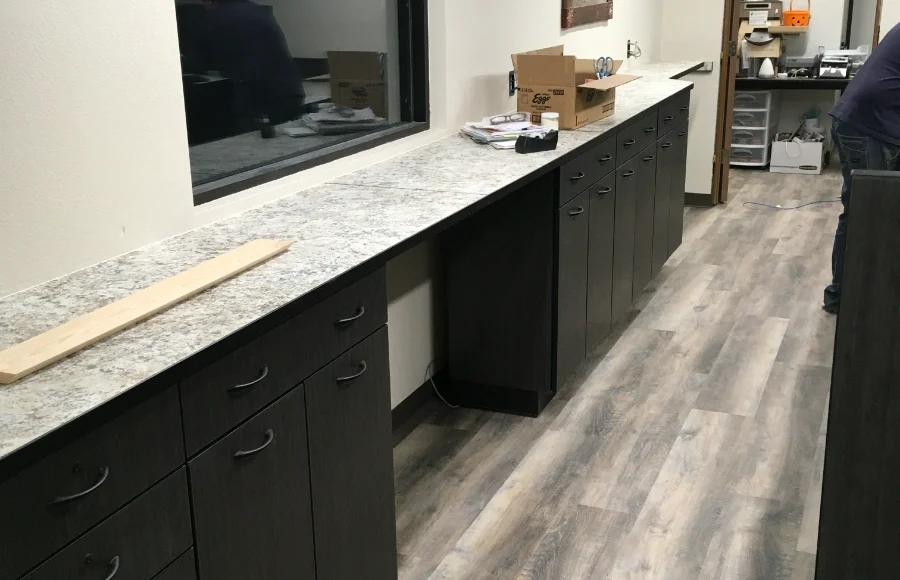
Bank teller counter with solid surface top and modular cabinetry being installed over a weekend

How to Renovate a Bank Without Closing the Branch

Renovating an operating bank presents a difficult challenge: the building may need substantial updates, but customers still expect uninterrupted access to essential services.

A teller-line replacement or lobby renovation can affect employee workflow, security equipment, electrical service, data connections, flooring, and customer circulation. When too much work is performed on site, the project can stretch across several business days and create noise, dust, restricted access, or temporary closures.

A different approach is to complete as much design and fabrication as possible before installation begins. With careful planning, custom bank furniture can be manufactured off site, delivered ready for installation, and installed during a weekend or another planned period of low activity.

Here is what that process typically involves.

Bank teller counter with solid surface top and modular cabinetry being installed over a weekend

Begin with the bank’s operational requirements

A successful renovation starts with more than measurements and finishes. The design team needs to understand how employees and customers use the space throughout the day.

Important questions include:

  • How many teller positions are needed?
  • Will the new layout include seated and standing transactions?
  • Where are cash drawers, security devices, computers, printers, and other equipment located?
  • How should customers move through the lobby?
  • Is an accessible transaction position required?
  • Does the bank expect staffing or service needs to change?
  • Which existing walls, flooring, electrical systems, and data connections will remain?

These details affect the configuration of the teller line, transaction counters, storage, equipment openings, cable management, and the surrounding work area.

Addressing them early reduces the chance of discovering conflicts during installation.

Document the existing conditions carefully

Accurate field information is essential when a project must fit into a short installation window.

The project team may need to verify:

  • Room dimensions
  • Wall conditions
  • Floor elevations
  • Door and corridor clearances
  • Electrical and data locations
  • Security-equipment requirements
  • Existing furniture dimensions
  • Flooring transitions
  • Delivery and loading access

Photographs, architectural drawings, equipment specifications, and field measurements help the design team identify potential problems before fabrication begins.

This is especially important when new modular furniture must connect with existing construction or accommodate equipment supplied by other vendors.

Finalize the design before fabrication

Three-dimensional drawings can help bank leadership and employees understand the proposed layout before materials are cut.

The review process should confirm:

  • Teller-station locations
  • Counter heights and depths
  • Customer and employee clearances
  • Storage requirements
  • Finish selections
  • Equipment placement
  • Power and data access
  • ADA considerations
  • Connections to adjacent walls or cabinetry

A detailed approval process gives the bank an opportunity to resolve operational concerns while changes are still relatively easy to make.

Once fabrication begins, the project should be based on an approved design rather than decisions being made in the field during installation.

Fabricate the teller line off site

Off-site fabrication is one of the most important elements of a low-disruption bank renovation.

Instead of building most of the teller line inside the branch, the furniture manufacturer can fabricate and assemble major components in a controlled shop environment. Components can be checked for fit, finish, hardware operation, and alignment before being delivered.

This approach can reduce:

  • On-site cutting and finishing
  • Construction dust
  • Noise during business hours
  • Material storage inside the branch
  • Installation uncertainty
  • The time required to complete the work on site

It also allows the installation crew to focus on placing, connecting, adjusting, and finishing the new furniture rather than constructing it from raw materials inside the bank.

Custom dark wood bank teller line viewed from the customer side during weekend installation

Coordinate every trade before installation weekend

Even a well-built teller line cannot be installed efficiently without coordination.

Depending on the project, the schedule may involve:

  • Furniture installers
  • Electricians
  • Data and communications contractors
  • Security vendors
  • Flooring installers
  • Painters
  • General contractors
  • Bank operations personnel
  • Equipment suppliers

The responsibilities and sequence should be established before the branch closes for the weekend.

For example, the project team should know when the existing teller line will be removed, when electrical or data connections will be relocated, when flooring repairs will occur, and when the new furniture can be placed.

Any unresolved dependency can delay the entire installation.

Plan the weekend installation in detail

A typical weekend renovation may begin after the branch closes on Friday and continue through Saturday and Sunday.

The sequence could include:

  1. Protecting floors and surrounding finishes
  2. Disconnecting equipment
  3. Removing the existing teller line
  4. Completing scheduled electrical, data, flooring, or wall work
  5. Bringing in the new modular components
  6. Installing and connecting the teller stations
  7. Reinstalling equipment
  8. Adjusting doors, drawers, panels, and hardware
  9. Cleaning the work area
  10. Completing a final walkthrough before reopening

The exact schedule varies by project, but the objective is the same: complete the disruptive work while the branch is closed and return the space to service before the next business day. For a real-world example, see how one bank had its entire teller line replaced over a single weekend while a larger renovation was already underway.

Completed bank teller station with staff working behind the counter on the first day after installation

Build flexibility into the new teller line

A bank’s needs may change long before the furniture reaches the end of its useful life.

Staffing levels can shift. New technology may be introduced. A branch may add a service position, change its customer flow, or update security equipment.

Modular construction can make future changes more manageable because individual components may be replaced, repaired, or reconfigured without rebuilding the entire installation.

That flexibility can be especially valuable for banks with multiple branches or evolving service models.

Allow time for final testing

Before reopening, the bank should test the systems employees rely on to serve customers.

The final review may include:

  • Computers and monitors
  • Power and data connections
  • Cash drawers
  • Security devices
  • Printers and transaction equipment
  • Doors, drawers, and locks
  • Lighting near the work area
  • Accessible transaction surfaces
  • Employee circulation
  • Customer-facing counters

The goal is not merely to finish construction. The goal is to return the branch to normal operation with a functional, clean, and fully prepared workspace.

Choose a partner that understands operational renovations

Bank renovations require coordination between design, fabrication, equipment integration, and installation.

Working with one team that can manage the custom furniture process from initial planning through final installation can reduce handoffs and help keep the project aligned with the bank’s operational schedule.

Modular Furniture Group designs, fabricates, and installs custom teller stations, transaction counters, banker workstations, reception furniture, and related commercial casework.

Based in Omaha, Nebraska, the company serves clients throughout Nebraska, Iowa, Colorado, Kansas, Missouri, Minnesota, North Dakota, South Dakota, and beyond, with completed projects from coast to coast.

a bank teller station remodeled in one weekend

How to Renovate Your Bank Interior Over a Weekend with Modular Furniture Group

Transforming your bank’s interior doesn’t have to mean weeks of downtime or costly disruptions. With the right approach, you can revamp your space in just one weekend, creating a modern, functional, and welcoming environment for your customers and staff. At Modular Furniture Group (MFG), we specialize in custom modular furniture solutions that make quick, seamless renovations a reality. Here’s a step-by-step guide to renovating your bank interior over a weekend, inspired by MFG’s proven process.

a bank teller station remodeled in one weekend

Why Choose a Weekend Renovation?

Banks are busy places, and closing for an extended period isn’t always an option. A weekend renovation minimizes operational interruptions, allowing you to keep serving customers without missing a beat. MFG’s modular furniture systems are designed for rapid installation, combining custom craftsmanship with efficiency to deliver high-quality results in record time. Our tagline, “renovate in a weekend,” reflects our commitment to fast, hassle-free transformations.

Step 1: Plan and Design with Precision

The key to a successful weekend renovation is preparation. Start by collaborating with MFG’s design team to create a tailored plan for your bank’s interior. Whether you need custom wood workstations, sleek reception counters, or flexible teller stations, MFG uses 3D digital drafting and pre-engineering to ensure every piece fits your space perfectly.

Assess Your Needs: Identify areas that need updating—perhaps outdated teller desks, cramped workspaces, or an uninspiring lobby.

Customize Your Furniture: Choose finishes, materials, and configurations that align with your brand and functional requirements. MFG offers natural woods and durable designs built to last.

Pre-Engineer for Speed: MFG preassembles components in our factory, so everything arrives ready to install, cutting on-site work to a minimum if at all.

By finalizing your design in advance, you set the stage for a smooth installation process.

Step 2: Coordinate for Seamless Execution

A weekend renovation requires tight coordination, and MFG excels at making it happen. We work closely with your contractor or facilities team to ensure every detail is covered, from delivery to setup.  Best of all, MFG offers a “turn-key” process that gives you the freedom to deal with one company to complete the change over procedure.

Schedule Strategically: Plan the renovation to begin after closing on Friday and wrap up before opening on Monday.

Preassemble for Efficiency: MFG’s furniture arrives premeasured and partially assembled, reducing on-site labor. Our workstations and cabinets are designed for quick setup, with features like bolt-together systems for easy integration.

Minimize Disruption: MFG’s turnkey installation process means your bank doesn’t need to shut down during regular hours. Our team coordinates electrical, data, and security integrations to keep your operations intact.

This streamlined approach ensures your renovation stays on track and on time.

a photograph of teller stations remodeled in 1 weekend

Step 3: Install with Expertise

On renovation weekend, MFG’s professional installers or your chosen contractors bring the design to life. Our modular furniture is built for rapid assembly, allowing us to transform your bank in hours, not days.

Friday Evening: Clear the space and prepare for installation. MFG’s team delivers preassembled components to the site.

Saturday: Install workstations, desks, and cabinets. MFG’s “old school” craftsmanship, paired with modern technology, ensures precision and durability.

Sunday: Complete final touches, such as wiring for computers and devices, and adjust furniture as needed. Our grid wall system makes it easy to integrate tech seamlessly.

By Sunday evening, your bank’s new interior is ready for a final walkthrough.

Step 4: Enjoy a Modern, Functional Space

When Monday arrives, your bank will look and feel brand new. MFG’s custom furniture not only enhances aesthetics but also improves functionality, with flexible designs that adapt to your evolving needs.

Boost Customer Experience: Sleek teller stations and inviting reception areas create a professional, welcoming vibe.

Empower Your Staff: Ergonomic workstations and modular layouts improve workflow and comfort.

Future-Proof Your Space: MFG’s furniture is built to be rearranged or expanded, so your bank can grow without needing another overhaul.

Plus, with MFG’s 10-year warranty and dedicated service team, you can trust that any issues will be resolved quickly, ensuring long-term satisfaction.

Why Modular Furniture Group?

For nearly four decades, MFG has been helping banks, businesses, and institutions renovate with ease. Our unique process combines:

Customization: Tailored designs that reflect your brand and meet your needs.

Speed: Pre-engineered components and expert installation for weekend transformations.

Quality: Eco-friendly materials and craftsmanship that stand the test of time.

Service: End-to-end support, from design to post-installation care.

Whether you’re updating a single branch or multiple locations, MFG makes it possible to achieve a high-end look without the high-end hassle.

a photo of a bank lobby remodeled in one weekend

Ready to Renovate?

A weekend is all it takes to give your bank a fresh, modern interior that wows customers and supports your team. With Modular Furniture Group’s custom solutions, you can renovate quickly, affordably, and sustainably. Visit  to explore our portfolio and start planning your transformation today. Let’s make your bank shine—by Monday morning!

Ready to Transform Your Bank?

Contact Modular Furniture Group at (402) 289-0309 or via email at [email protected] to discuss how they can help you renovate your bank interior over a weekend. Their team is ready to assist you in creating a functional and aesthetically pleasing environment for both your employees and customers.​

Don’t let a lengthy renovation process hinder your operations. With Modular Furniture Group, a refreshed and efficient bank interior is just a weekend away.​

Ready to start your project?