
How Bank Furniture Affects Customer Trust
When a customer walks into a bank branch, they form an impression before anyone greets them. The lobby, the teller line, the materials, the condition of the furniture, and the overall environment all communicate something about the institution. Whether the message is one of stability and professionalism or neglect and indifference often comes down to the physical workspace.
Banking is a trust-based business. Customers are handing over their money, their financial information, and in many cases their long-term financial plans. The environment where those interactions happen plays a larger role in shaping confidence than most banks realize.
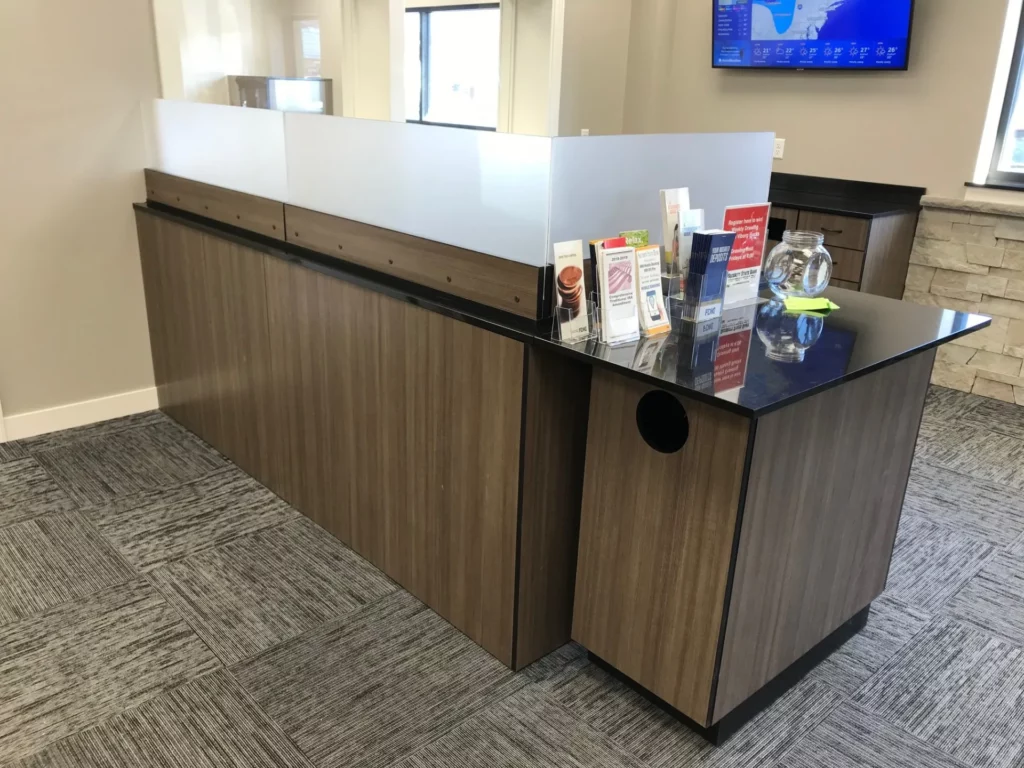
First impressions happen at the teller line
The teller station is usually the first physical touchpoint a customer has with the bank. It is where they hand over deposits, discuss transactions, and interact with staff face to face. The design, condition, and appearance of that station set the tone for the entire relationship.
A teller line with worn surfaces, mismatched finishes, or outdated materials sends an unintended message. Customers may not consciously think about the furniture, but they register the overall impression. A dated, tired-looking branch suggests an institution that is not investing in itself. For a business built on trust and long-term relationships, that impression carries weight.
A well-designed teller station communicates the opposite. Clean lines, quality materials, coordinated finishes, and a layout that supports efficient service all contribute to a sense of professionalism. The customer may not notice the furniture specifically, but they notice that the branch feels modern, organized, and well-run.
Layout affects how customers experience service
Beyond appearance, the physical layout of a branch directly affects how customers move through the space and how they experience the service they receive.
A poorly laid out lobby creates confusion. Customers are unsure where to go, where to wait, or who to approach. Lines form in awkward places. Conversations that should be private happen within earshot of other customers. The experience feels disorganized even if the staff is doing everything right.
Thoughtful furniture placement solves these problems quietly. Customer service islands positioned near the entrance give visitors an immediate point of reference. Personal banker workstations placed with appropriate spacing provide a sense of privacy for financial conversations. A teller line designed around actual customer flow reduces congestion and wait times.
The goal is an environment where the furniture guides the experience without drawing attention to itself. When the layout works, customers move through the branch naturally and leave feeling well served.
Employee workspace affects service quality
The customer-facing side of the teller line is only half the equation. The employee side matters just as much, because the quality of the workspace directly affects the quality of the service delivered from it.
Teller stations with inadequate storage force employees to work around clutter. Workstations without proper cable management create visual disorder and make equipment difficult to service. Counters at the wrong height cause fatigue over long shifts. Shared workspaces without enough individual space lead to errors and frustration.
When employees have a workspace that supports how they actually work, including organized storage, accessible equipment, comfortable ergonomics, and enough personal space, they perform better. Transactions move faster. Errors decrease. Staff morale improves. All of that translates directly into a better customer experience.
Outdated furniture ages the entire branch
A bank can update its paint, flooring, signage, and digital displays, but if the teller line and workstations are visibly outdated, the branch still looks old. The furniture anchors the visual impression of the entire space.
This is especially true for banks that have renovated other elements of the branch over time but left the original teller stations and casework in place. The contrast between updated surroundings and aging furniture can actually make the furniture look worse than it would on its own.
For banks with multiple branches, furniture consistency also matters. When a customer visits one location and sees modern, coordinated furniture, then visits another location with a completely different look, it undermines the sense of a unified brand. A consistent furniture standard across branches reinforces the identity of the institution.
Renovation does not have to mean disruption
One of the most common reasons banks delay a furniture upgrade is concern about disruption. A branch cannot easily close for a week while contractors build a new teller line on site.
This is where the construction method matters. Custom modular furniture can be designed, fabricated, and installed without an extended branch closure. Components are built off site in a controlled shop environment, delivered ready for assembly, and installed over a weekend. The branch closes Friday afternoon and reopens Monday morning with a completely updated interior.
The modular approach also means the investment is not permanent in the way traditional built-in millwork is. Individual components can be replaced, reconfigured, or relocated as the bank’s needs change over time. That flexibility protects the initial investment and makes future updates more manageable.
The environment communicates before anyone says a word
A bank branch is not just a place where transactions happen. It is a physical representation of the institution’s values, stability, and commitment to its customers. The furniture, layout, and overall environment either reinforce that message or undermine it.
Banks that invest in well-designed, professionally built furniture are not just improving aesthetics. They are investing in customer confidence, employee performance, and the long-term perception of their brand.
Modular Furniture Group designs, fabricates, and installs custom teller stations, transaction counters, banker workstations, customer service islands, and related commercial casework for banks and credit unions.
Based in Omaha, Nebraska, the company serves clients throughout Nebraska, Iowa, Colorado, Kansas, Missouri, Minnesota, North Dakota, South Dakota, and beyond, with completed projects from coast to coast. Contact Modular Furniture Group at (402) 289-0309 or [email protected].