
Modular Teller Stations vs. Traditional Built-In Millwork
A teller line is one of the most important working areas in a bank branch. It affects customer service, employee workflow, equipment placement, security, storage, and the appearance of the lobby.
When a bank replaces or redesigns its teller stations, one of the first decisions is whether to use modular furniture or conventional built-in millwork.
Both approaches can produce an attractive finished space, but they differ significantly in how they are designed, fabricated, installed, maintained, and changed over time.
Understanding those differences can help bank leaders, architects, and contractors select the right solution for a particular branch.
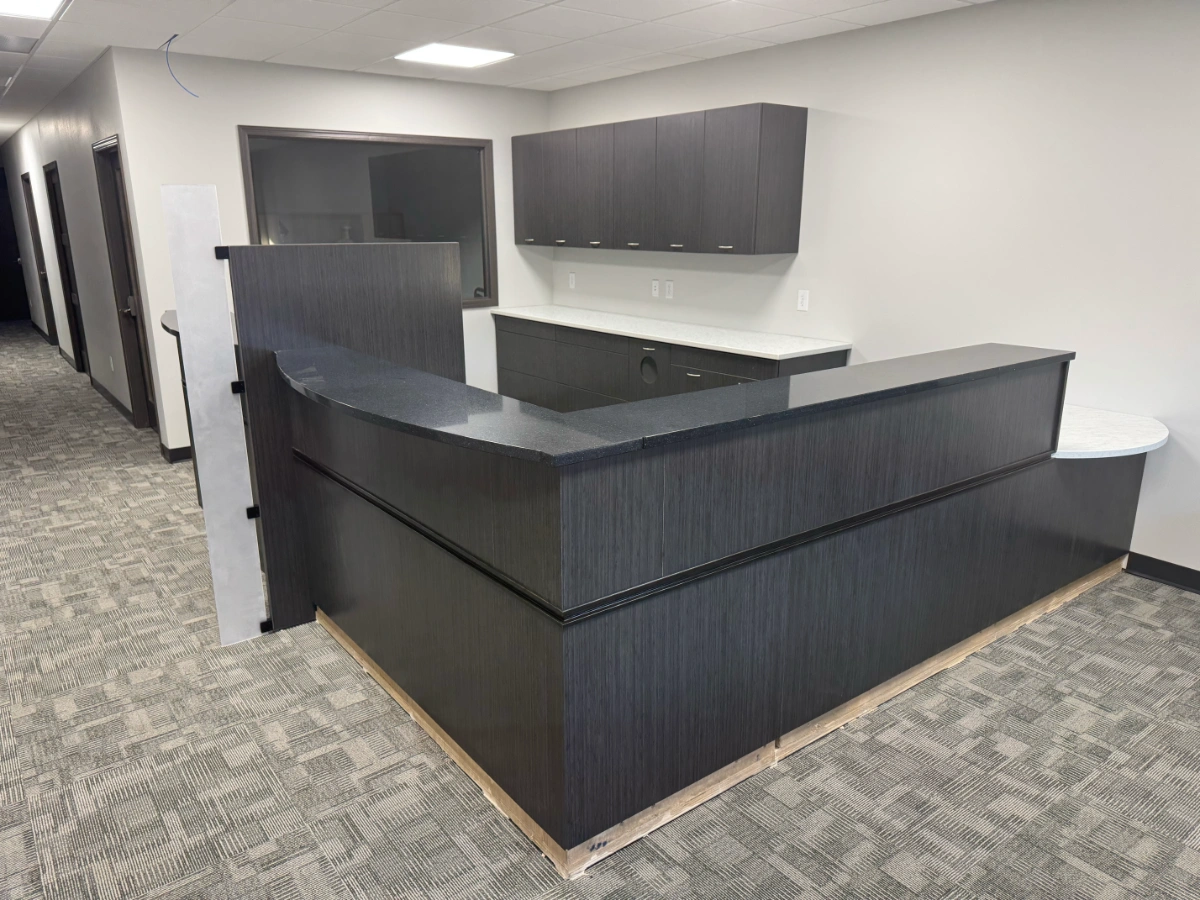
What is a modular teller station?
A modular teller station is a custom commercial workstation constructed as coordinated sections or components.
Although the word “modular” sometimes suggests standardized office furniture, a modular teller line can still be designed specifically for the bank’s space, finishes, equipment, workflow, and customer-service requirements.
The modular aspect refers primarily to how the system is constructed and installed. Individual sections can be fabricated off site, delivered as coordinated components, and assembled into a complete teller line at the branch.
Depending on the design, the system may include:
- Employee work surfaces
- Customer transaction counters
- Cash-drawer storage
- Locking cabinets
- Printer and equipment locations
- Power and data access
- Security-device provisions
- Removable access panels
- Standing and accessible transaction positions
- Decorative panels and finish elements
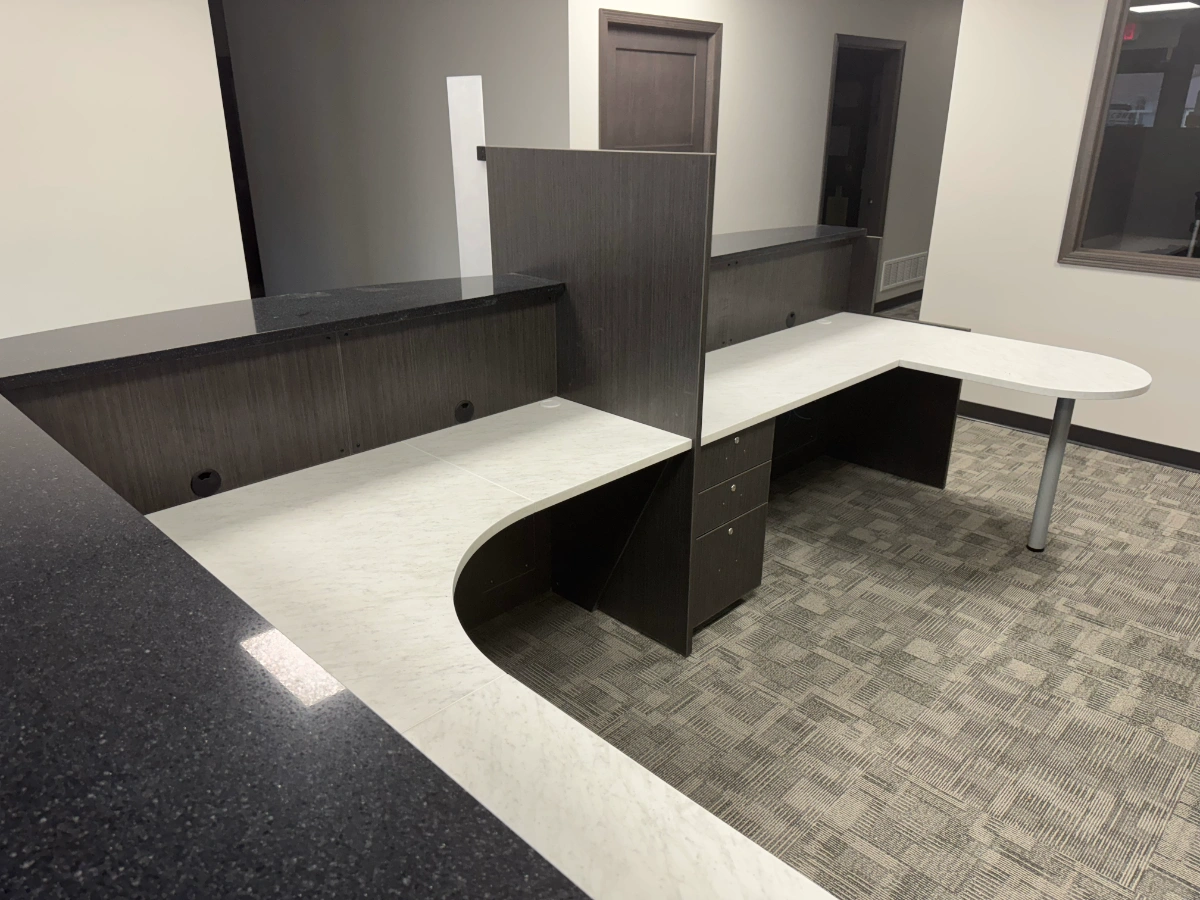
What is traditional built-in millwork?
Traditional built-in millwork is generally fabricated as a more permanent part of the building. Some components may be produced in a cabinet shop, while other fitting, assembly, modification, or finishing work may occur on site. The final installation is often closely tied to walls, flooring, utilities, and surrounding construction.
Built-in millwork can be appropriate when a design requires highly architectural detailing or when the installation is intended to remain unchanged for a long period.
However, a more permanent construction method may also make later alterations more difficult.
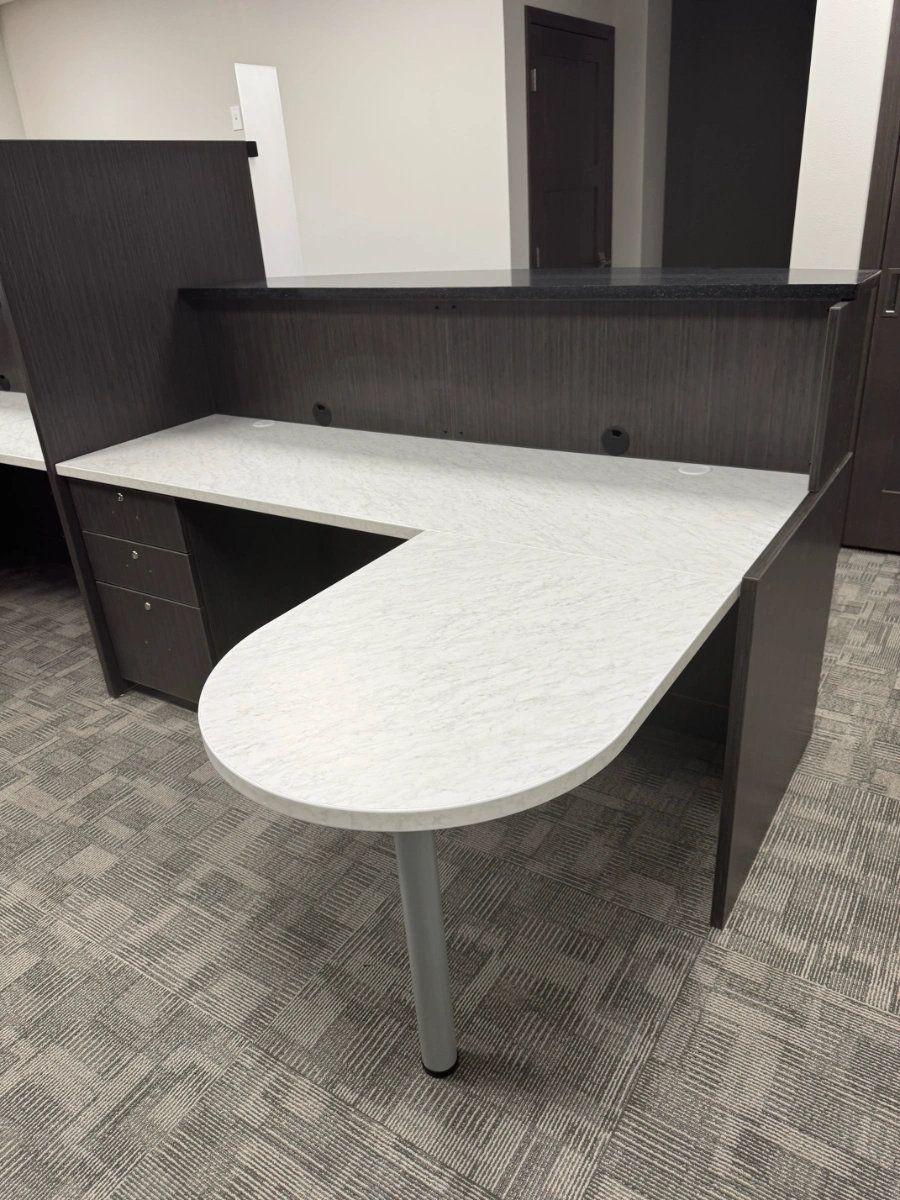
Installation time and branch disruption
Installation is often the most important difference for an operating bank.
A conventional millwork project may require extensive on-site work, depending on how the components are fabricated and how closely they must be fitted to the building. This can involve cutting, assembly, field modification, finishing, and coordination with other trades.
A modular teller system can be substantially fabricated before it reaches the branch. When measurements, drawings, equipment requirements, and site conditions have been confirmed in advance, the components can arrive ready for installation.
That can reduce the amount of work performed inside the bank and may make it possible to complete the disruptive portion of the project over a weekend.
For a branch that wants to avoid closing during normal business hours, the installation strategy can be as important as the furniture itself.
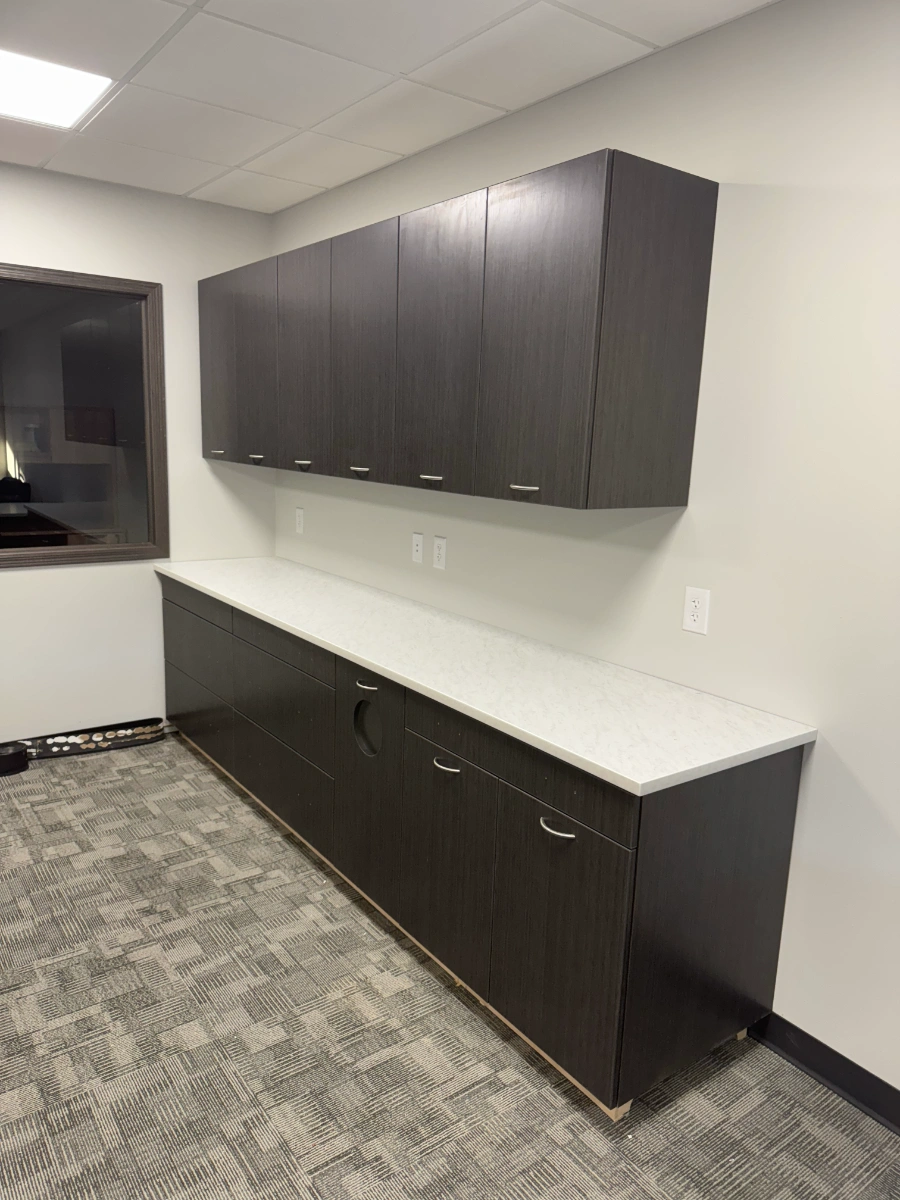
Design flexibility
Both modular furniture and traditional millwork can be customized.
The important distinction is not whether the teller line can be designed for the space. It is how easily the completed installation can adapt later.
A modular system may allow the bank to:
- Replace an individual panel
- Update a work surface
- Add or remove storage
- Modify an equipment opening
- Reconfigure selected sections
- Replace a damaged component
- Expand the line when space allows
- Update finishes without removing the entire installation
Traditional built-in millwork may be more difficult to modify because its components are often interconnected or permanently fitted to the surrounding construction.
Banks expecting future staffing, technology, or workflow changes may place greater value on this adaptability.
Power, data, and equipment integration
Modern teller stations must accommodate more than cash drawers and countertop space.
The design may need to account for:
- Computers and monitors
- Printers and scanners
- Power supplies
- Data connections
- Alarm devices
- Security equipment
- Communication systems
- Under-counter equipment
- Cable routing and access
- Future technology changes
Both construction methods can integrate these elements, but the access strategy matters.
A modular design can incorporate removable panels, accessible equipment compartments, and planned cable pathways. This can make it easier for technicians to service or replace equipment without dismantling large portions of the teller line.
Before approving any design, the bank should confirm not only where equipment will be placed, but also how employees and service technicians will access it later.
Repair and component replacement
Commercial teller furniture experiences daily wear.
Counter edges, drawer hardware, work surfaces, panels, locks, and doors may eventually need adjustment or replacement.
With a modular system, an affected component may be removable without replacing the entire teller line. This can reduce the scope of future repair work and help the bank preserve the rest of the installation.
With permanently built-in millwork, a damaged or outdated section may be more difficult to isolate. Repairs can involve adjacent components or require more extensive field work.
The actual serviceability depends on the design, hardware, and construction method, so banks should ask how common repairs are handled before purchasing.
Appearance and finish options
A modular teller line does not need to look temporary or generic.
Custom systems can incorporate:
- High-pressure laminates
- Wood-look finishes
- Solid-surface materials
- Decorative panels
- Contrasting transaction counters
- Metal accents
- Branded colors
- Integrated signage
- Coordinated lobby and banker-station furniture
The design can be tailored to match the bank’s existing architecture or support a broader branch rebranding. See the full range of custom banking furniture options available from Modular Furniture Group.
Traditional millwork may offer certain architectural detailing advantages, but the appearance of either system depends heavily on the quality of the design, fabrication, and installation.
The decision should not be based on appearance alone.
Long-term change and reconfiguration
A teller line may remain in place for many years, but banking operations do not remain static.
A branch may eventually need to:
- Change the number of teller positions
- Add an accessible service position
- Incorporate new equipment
- Alter customer flow
- Convert a transaction position to another use
- Replace worn finishes
- Coordinate with a future lobby renovation
A modular system is often better suited to planned change because it is built from coordinated, serviceable components.
Traditional millwork may be a reasonable choice when the design is highly specialized, the surrounding architecture dictates a permanent installation, and future reconfiguration is unlikely.
Which option is right for a bank?
There is no universal answer. The right approach depends on the branch, project schedule, design requirements, and long-term plans.
Modular teller stations may be especially appropriate when:
- The branch must remain open during the project
- A weekend installation is preferred
- Future reconfiguration is likely
- Equipment access is important
- Individual components may need replacement
- Multiple branches require a repeatable design approach
- The bank wants one provider to design, fabricate, and install the furniture
Traditional built-in millwork may be considered when:
- The teller line is deeply integrated into the architecture
- Extensive custom field fitting is unavoidable
- The installation is unlikely to change
- The project schedule already includes a longer branch closure
- The construction team is managing a larger interior build-out
The best decision comes from evaluating the complete life of the teller line – not only its appearance on installation day.
Questions to ask before choosing a teller-line system
Before selecting a furniture provider or construction method, ask:
- How much of the teller line will be fabricated off site?
- How long will installation take inside the branch?
- Can the work be completed over a weekend?
- How will power, data, and security equipment be integrated?
- Can technicians access the equipment after installation?
- Can individual panels, surfaces, or cabinets be replaced?
- Can the layout be modified in the future?
- Who is responsible for field measurements?
- Will the bank review three-dimensional drawings before fabrication?
- Who coordinates installation with the other trades?
- What warranty covers the completed furniture?
- Does the provider have experience with operational bank renovations?
The answers will reveal more than a simple price comparison.
Custom modular teller stations from Modular Furniture Group
Modular Furniture Group designs, fabricates, and installs custom teller stations, transaction counters, banker workstations, reception furniture, and related commercial casework.
The company manages the furniture process from initial planning and three-dimensional design through fabrication and installation. By completing much of the work before arriving at the branch, the team can help reduce installation time and limit disruption to bank employees and customers.
Based in Omaha, Nebraska, Modular Furniture Group serves Nebraska, Iowa, Colorado, Kansas, Missouri, Minnesota, North Dakota, South Dakota, and clients beyond the region. Projects have been completed from coast to coast.