
How to Renovate a Bank Without Closing the Branch
Renovating an operating bank presents a difficult challenge: the building may need substantial updates, but customers still expect uninterrupted access to essential services.
A teller-line replacement or lobby renovation can affect employee workflow, security equipment, electrical service, data connections, flooring, and customer circulation. When too much work is performed on site, the project can stretch across several business days and create noise, dust, restricted access, or temporary closures.
A different approach is to complete as much design and fabrication as possible before installation begins. With careful planning, custom bank furniture can be manufactured off site, delivered ready for installation, and installed during a weekend or another planned period of low activity.
Here is what that process typically involves.
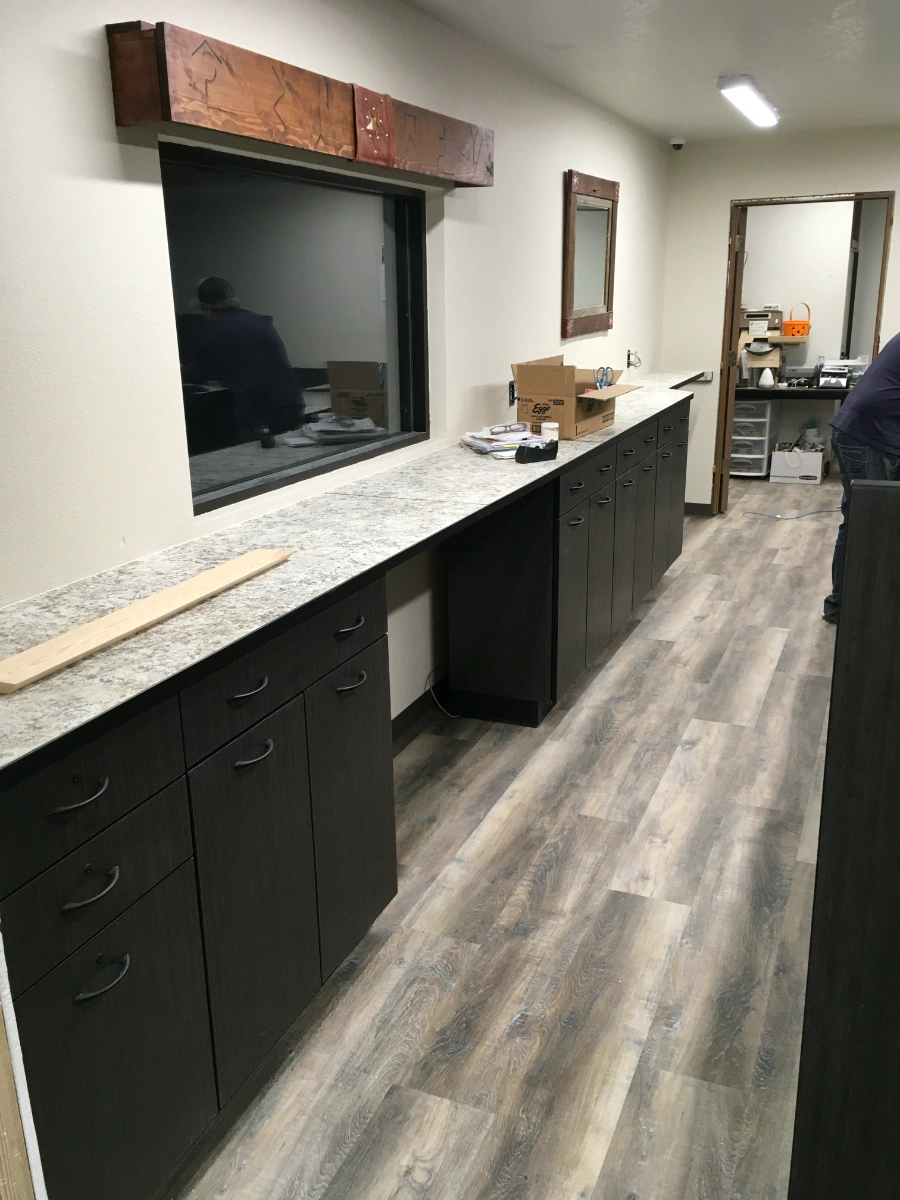
Begin with the bank’s operational requirements
A successful renovation starts with more than measurements and finishes. The design team needs to understand how employees and customers use the space throughout the day.
Important questions include:
- How many teller positions are needed?
- Will the new layout include seated and standing transactions?
- Where are cash drawers, security devices, computers, printers, and other equipment located?
- How should customers move through the lobby?
- Is an accessible transaction position required?
- Does the bank expect staffing or service needs to change?
- Which existing walls, flooring, electrical systems, and data connections will remain?
These details affect the configuration of the teller line, transaction counters, storage, equipment openings, cable management, and the surrounding work area.
Addressing them early reduces the chance of discovering conflicts during installation.
Document the existing conditions carefully
Accurate field information is essential when a project must fit into a short installation window.
The project team may need to verify:
- Room dimensions
- Wall conditions
- Floor elevations
- Door and corridor clearances
- Electrical and data locations
- Security-equipment requirements
- Existing furniture dimensions
- Flooring transitions
- Delivery and loading access
Photographs, architectural drawings, equipment specifications, and field measurements help the design team identify potential problems before fabrication begins.
This is especially important when new modular furniture must connect with existing construction or accommodate equipment supplied by other vendors.
Finalize the design before fabrication
Three-dimensional drawings can help bank leadership and employees understand the proposed layout before materials are cut.
The review process should confirm:
- Teller-station locations
- Counter heights and depths
- Customer and employee clearances
- Storage requirements
- Finish selections
- Equipment placement
- Power and data access
- ADA considerations
- Connections to adjacent walls or cabinetry
A detailed approval process gives the bank an opportunity to resolve operational concerns while changes are still relatively easy to make.
Once fabrication begins, the project should be based on an approved design rather than decisions being made in the field during installation.
Fabricate the teller line off site
Off-site fabrication is one of the most important elements of a low-disruption bank renovation.
Instead of building most of the teller line inside the branch, the furniture manufacturer can fabricate and assemble major components in a controlled shop environment. Components can be checked for fit, finish, hardware operation, and alignment before being delivered.
This approach can reduce:
- On-site cutting and finishing
- Construction dust
- Noise during business hours
- Material storage inside the branch
- Installation uncertainty
- The time required to complete the work on site
It also allows the installation crew to focus on placing, connecting, adjusting, and finishing the new furniture rather than constructing it from raw materials inside the bank.
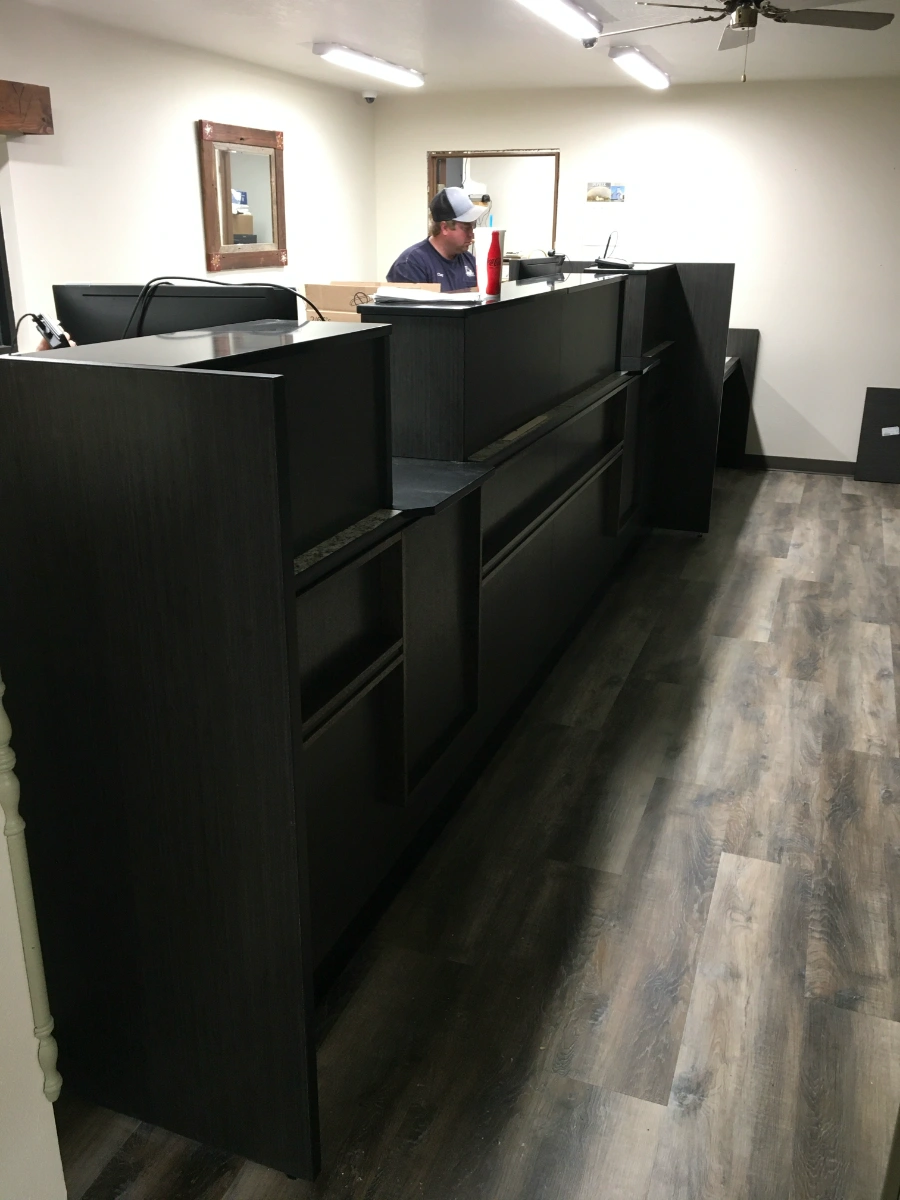
Coordinate every trade before installation weekend
Even a well-built teller line cannot be installed efficiently without coordination.
Depending on the project, the schedule may involve:
- Furniture installers
- Electricians
- Data and communications contractors
- Security vendors
- Flooring installers
- Painters
- General contractors
- Bank operations personnel
- Equipment suppliers
The responsibilities and sequence should be established before the branch closes for the weekend.
For example, the project team should know when the existing teller line will be removed, when electrical or data connections will be relocated, when flooring repairs will occur, and when the new furniture can be placed.
Any unresolved dependency can delay the entire installation.
Plan the weekend installation in detail
A typical weekend renovation may begin after the branch closes on Friday and continue through Saturday and Sunday.
The sequence could include:
- Protecting floors and surrounding finishes
- Disconnecting equipment
- Removing the existing teller line
- Completing scheduled electrical, data, flooring, or wall work
- Bringing in the new modular components
- Installing and connecting the teller stations
- Reinstalling equipment
- Adjusting doors, drawers, panels, and hardware
- Cleaning the work area
- Completing a final walkthrough before reopening
The exact schedule varies by project, but the objective is the same: complete the disruptive work while the branch is closed and return the space to service before the next business day. For a real-world example, see how one bank had its entire teller line replaced over a single weekend while a larger renovation was already underway.
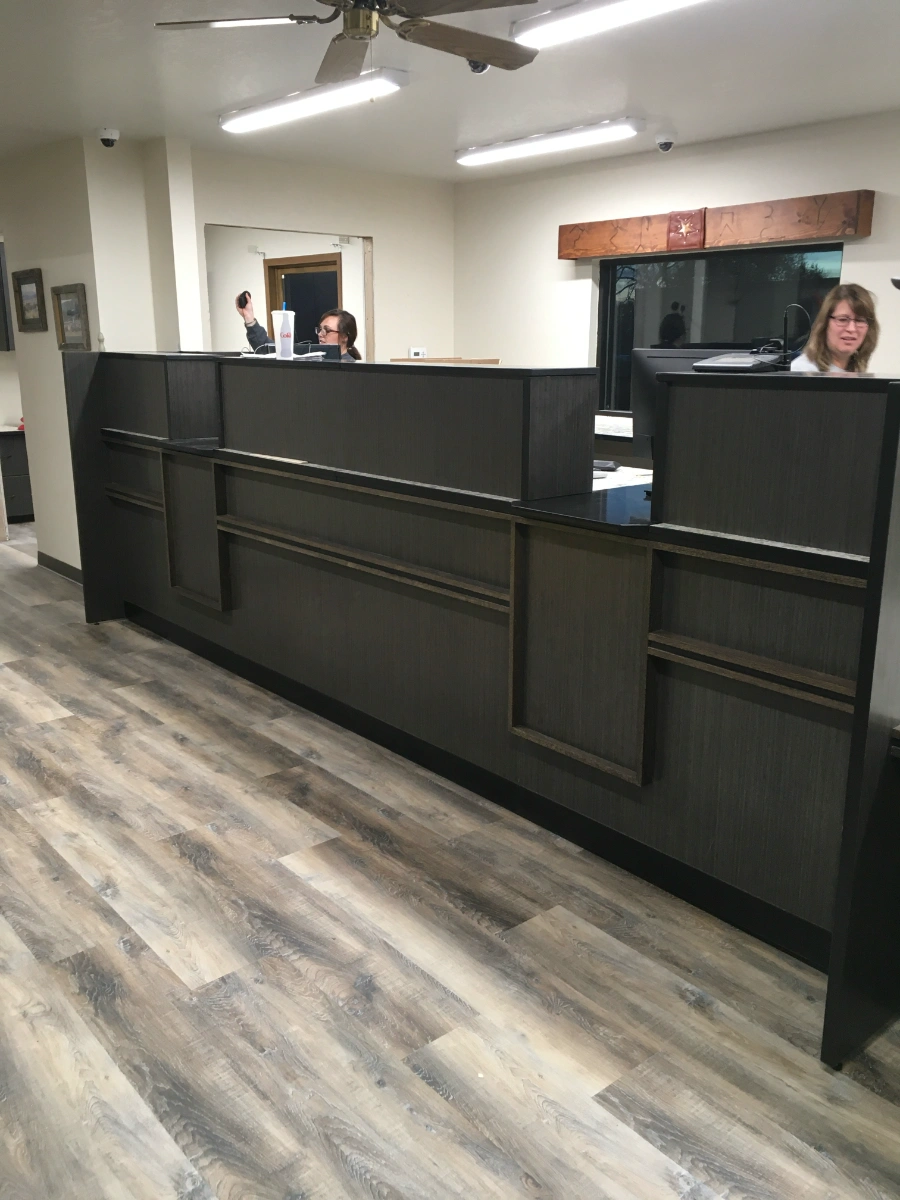
Build flexibility into the new teller line
A bank’s needs may change long before the furniture reaches the end of its useful life.
Staffing levels can shift. New technology may be introduced. A branch may add a service position, change its customer flow, or update security equipment.
Modular construction can make future changes more manageable because individual components may be replaced, repaired, or reconfigured without rebuilding the entire installation.
That flexibility can be especially valuable for banks with multiple branches or evolving service models.
Allow time for final testing
Before reopening, the bank should test the systems employees rely on to serve customers.
The final review may include:
- Computers and monitors
- Power and data connections
- Cash drawers
- Security devices
- Printers and transaction equipment
- Doors, drawers, and locks
- Lighting near the work area
- Accessible transaction surfaces
- Employee circulation
- Customer-facing counters
The goal is not merely to finish construction. The goal is to return the branch to normal operation with a functional, clean, and fully prepared workspace.
Choose a partner that understands operational renovations
Bank renovations require coordination between design, fabrication, equipment integration, and installation.
Working with one team that can manage the custom furniture process from initial planning through final installation can reduce handoffs and help keep the project aligned with the bank’s operational schedule.
Modular Furniture Group designs, fabricates, and installs custom teller stations, transaction counters, banker workstations, reception furniture, and related commercial casework.
Based in Omaha, Nebraska, the company serves clients throughout Nebraska, Iowa, Colorado, Kansas, Missouri, Minnesota, North Dakota, South Dakota, and beyond, with completed projects from coast to coast.